


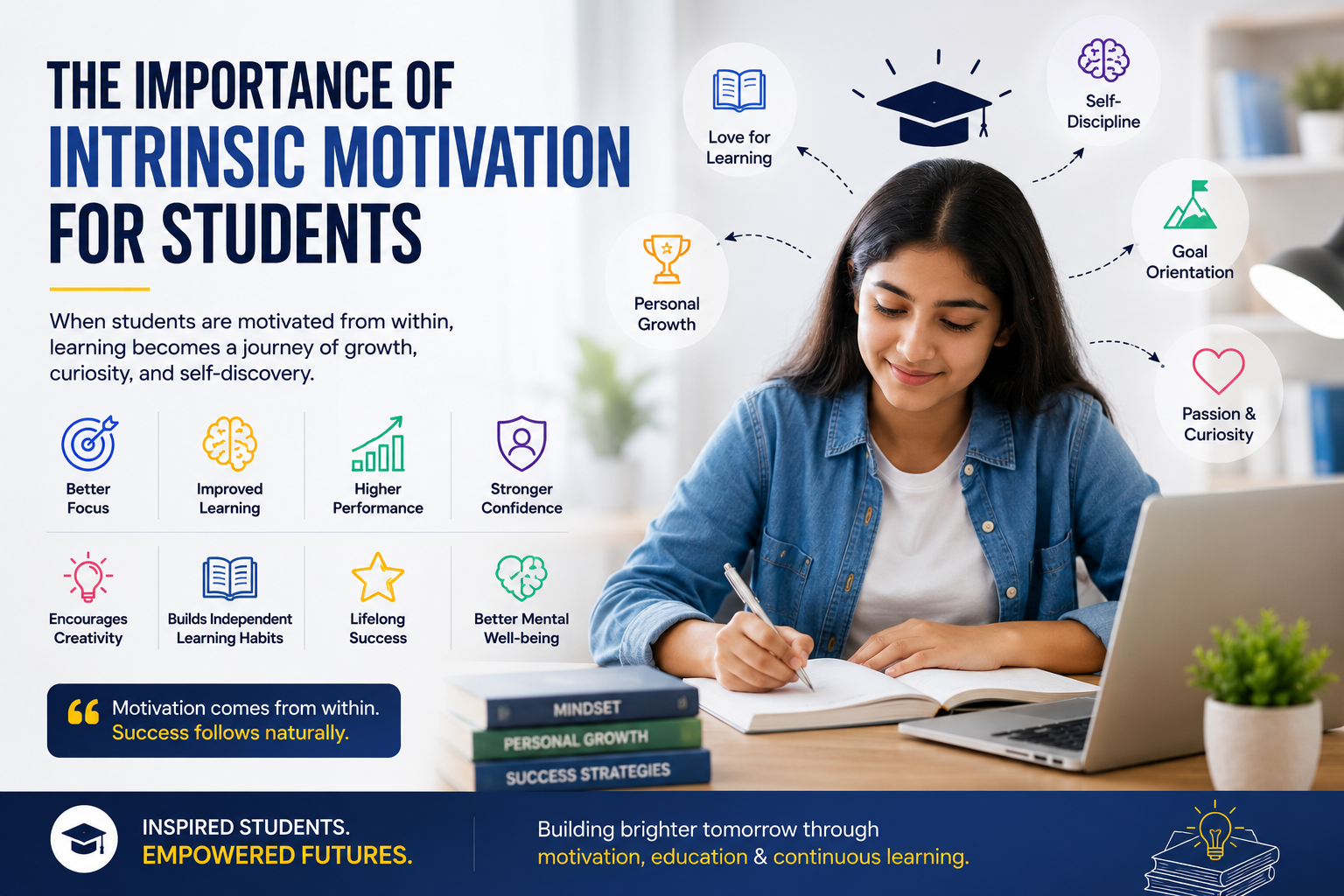
Importance of Intrinsic Motivation for Students in 2026
Discover the importance of intrinsic motivation for students in 2026 and how self-driven learning improves academic performance, confidence, and future success.
Student success is no longer based only on grades and examinations. In 2026, education focuses more on creativity, critical thinking, problem-solving, and continuous learning. Because of this shift, intrinsic motivation has become one of the most important factors in student growth and academic success.
Intrinsic motivation refers to the internal desire to learn, improve, and achieve goals without external pressure or rewards. Students who are internally motivated often enjoy learning, remain curious, and actively participate in educational activities.
Modern education systems are increasingly encouraging self-driven learning because motivated students perform better academically, develop stronger confidence, and prepare more effectively for future careers.
What Is Intrinsic Motivation?
Intrinsic motivation is the desire to perform an activity because it is personally rewarding and meaningful.
Instead of studying only for grades, rewards, or pressure, intrinsically motivated students learn because they genuinely enjoy gaining knowledge and improving themselves.
Examples of Intrinsic Motivation
- Learning new skills out of curiosity
- Reading educational content for personal growth
- Participating actively in classroom discussions
- Solving problems for satisfaction
- Improving abilities through self-learning
Intrinsic motivation encourages lifelong learning and continuous personal development.
Why Intrinsic Motivation Is Important in 2026
Modern industries are evolving rapidly because of artificial intelligence, automation, and digital transformation. Students today need adaptability, creativity, and independent learning abilities to succeed in future careers.
Intrinsic motivation helps students:
- Improve academic performance
- Develop self-confidence
- Build independent learning habits
- Increase creativity and innovation
- Stay focused on long-term goals
- Develop problem-solving abilities
Students who are internally motivated are more likely to remain consistent and committed to learning.
1. Improves Academic Performance
Motivated students usually show higher levels of focus, participation, and dedication toward their studies.
When students genuinely enjoy learning, they naturally spend more time understanding concepts and improving their skills.
Benefits for Academic Growth
- Better concentration
- Improved learning retention
- Higher classroom participation
- Stronger problem-solving abilities
- Better exam performance
Intrinsic motivation helps students move beyond memorization and focus on deeper understanding.
2. Encourages Lifelong Learning
In 2026, continuous learning is essential because industries and technologies change rapidly.
Students with intrinsic motivation develop curiosity and self-learning habits that continue throughout life.
Lifelong Learning Benefits
- Better career adaptability
- Continuous skill improvement
- Stronger confidence
- Increased creativity
- Better future opportunities
Self-motivated learners are more prepared for future educational and professional challenges.
3. Builds Self-Confidence and Independence
Intrinsic motivation helps students become more confident and independent in their learning journey.
Students who take responsibility for their education often develop stronger self-belief and decision-making abilities.
Skills Developed Through Self-Motivation
| Skill | Benefit |
|---|---|
| Self-discipline | Better consistency |
| Time management | Improved productivity |
| Accountability | Personal growth |
| Independent thinking | Better decision-making |
| Confidence | Improved performance |
Confidence plays a major role in both academic and career success.
4. Reduces Dependence on External Rewards
Many students study only because of grades, competition, or parental pressure. However, external rewards often create short-term motivation.
Intrinsic motivation creates long-term learning habits because students enjoy the learning process itself.
Difference Between Motivation Types
| Intrinsic Motivation | Extrinsic Motivation |
|---|---|
| Internal satisfaction | External rewards |
| Long-term learning | Short-term focus |
| Self-driven goals | Pressure-driven actions |
| Personal growth | Competition-focused |
Students with intrinsic motivation are more likely to continue learning even without supervision.
5. Improves Creativity and Innovation
Creative thinking is becoming one of the most valuable skills in modern education and future industries.
Intrinsically motivated students are more willing to:
- Explore new ideas
- Ask questions
- Experiment with solutions
- Think critically
- Develop innovative approaches
This mindset helps students adapt to future careers driven by technology and innovation.
6. Supports Mental and Emotional Well-Being
Students who learn because of personal interest often experience less stress compared to students studying only because of pressure.
Intrinsic motivation creates a healthier learning environment and improves emotional well-being.
Emotional Benefits
- Reduced academic stress
- Better learning satisfaction
- Higher confidence levels
- Improved positivity
- Better resilience during challenges
Positive motivation helps students enjoy education instead of fearing it.
7. Role of Teachers and Parents in Building Motivation
Teachers and parents play an important role in developing intrinsic motivation among students.
Instead of focusing only on grades and competition, educators should encourage curiosity, creativity, and personal growth.
Ways to Encourage Intrinsic Motivation
- Appreciate effort and progress
- Encourage independent thinking
- Create engaging learning environments
- Support student interests
- Promote practical learning
- Use positive feedback
A supportive environment increases student confidence and motivation.
8. Technology and Personalized Learning Motivation
Technology is also helping improve student motivation through interactive and personalized learning experiences.
Modern educational tools now use AI-powered systems, gamification, and adaptive learning platforms to increase engagement.
Technology That Improves Student Motivation
| Educational Technology | Benefit |
|---|---|
| AI Learning Platforms | Personalized education |
| Gamified Learning Apps | Better engagement |
| Interactive Videos | Improved understanding |
| Online Learning Systems | Flexible education |
Technology-driven education makes learning more engaging and student-focused.
Common Challenges That Reduce Student Motivation
Many students struggle with motivation because of academic pressure, distractions, or lack of interest in traditional learning methods.
Common Motivation Challenges
- Fear of failure
- Excessive academic pressure
- Lack of confidence
- Digital distractions
- Poor learning environments
- Limited practical learning
Educational institutions must create supportive and engaging learning systems to help students remain motivated.
Future of Student Motivation in 2026
The future of education will focus more on student-centered learning, creativity, and emotional development instead of only academic scores.
Several trends are shaping future student motivation:
Future Educational Trends
- Personalized learning systems
- AI-powered education
- Flexible online learning
- Skill-based education
- Interactive classrooms
- Practical learning experiences
Students who develop intrinsic motivation will be better prepared for future careers and lifelong success.
Final Thoughts
Intrinsic motivation has become one of the most important factors in modern education. In 2026, students need more than academic knowledge to succeed. They need curiosity, self-discipline, confidence, creativity, and continuous learning habits.
Students who are internally motivated often perform better academically, adapt more effectively to challenges, and develop stronger personal and professional skills.
Educational institutions, teachers, and parents must focus on creating positive learning environments that encourage self-driven learning and long-term personal growth.
As education continues evolving through technology and innovation, intrinsic motivation will remain essential for student success and future career development.
FAQs
What is intrinsic motivation for students?
Intrinsic motivation is the internal desire to learn and improve because of personal interest and satisfaction rather than external rewards.
Why is intrinsic motivation important in education?
It improves academic performance, creativity, confidence, and lifelong learning habits.
How can teachers improve student motivation?
Teachers can encourage motivation through positive feedback, engaging lessons, practical learning, and supportive classroom environments.
How does technology improve student motivation?
Technology improves engagement through personalized learning, gamification, interactive content, and flexible online education.
What is the difference between intrinsic and extrinsic motivation?
Intrinsic motivation comes from personal interest, while extrinsic motivation depends on rewards, grades, or external pressure.
Why is intrinsic motivation important for future careers?
Self-motivated students adapt better to changing industries, continuous learning, and future workplace challenges.

