


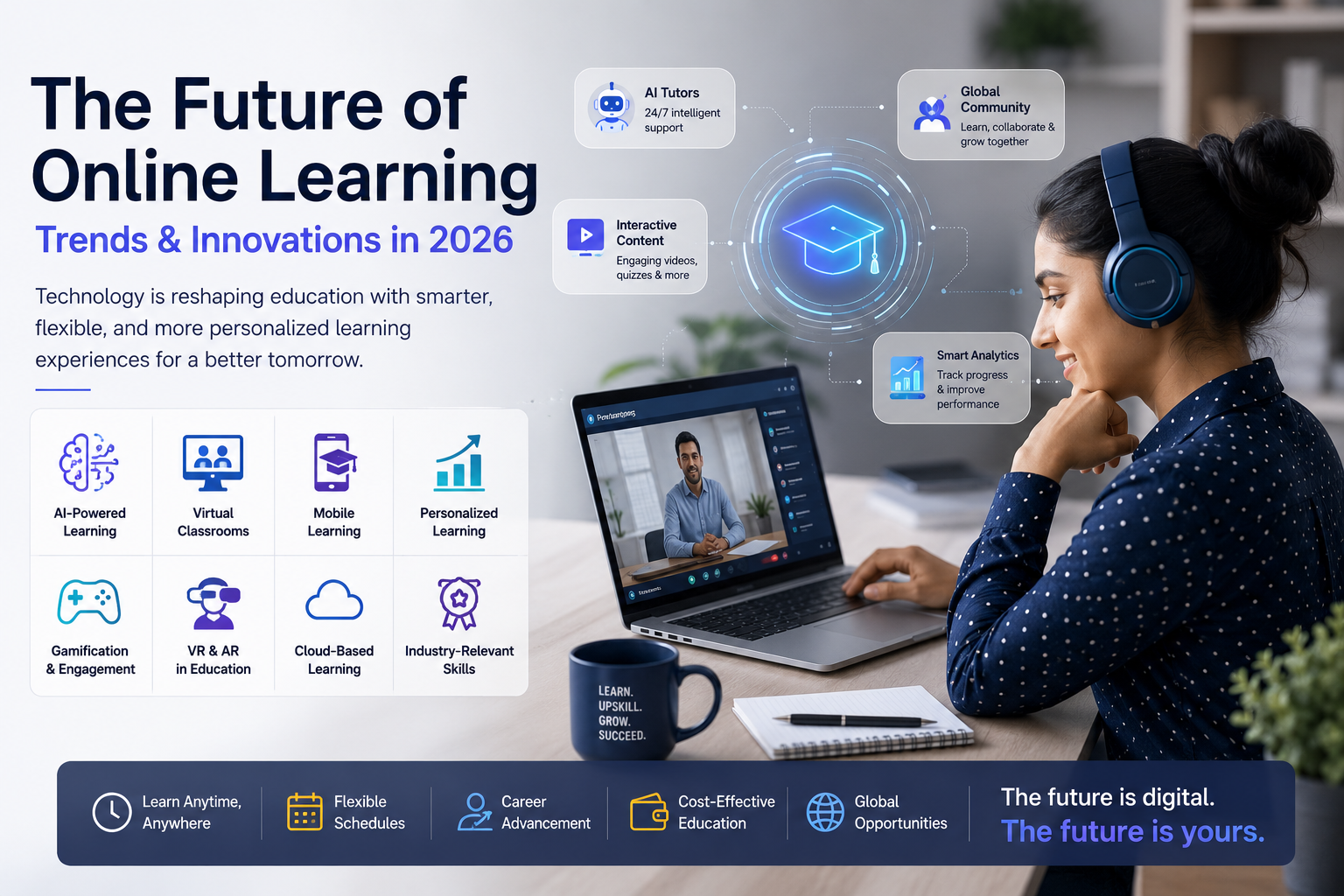
Future of Online Learning in 2026 | Trends & Innovations
Explore the future of online learning in 2026, including AI-powered education, virtual classrooms, flexible learning, and modern educational innovations.
Online learning has transformed modern education by making learning more flexible, accessible, and career-focused. In 2026, digital education is evolving rapidly through artificial intelligence, smart technologies, and personalized learning experiences.
What once started as a simple alternative to traditional classrooms has now become one of the most powerful educational systems worldwide. Students, working professionals, and lifelong learners increasingly prefer online education because it provides flexibility, affordability, and global accessibility.
Modern online learning platforms now focus on AI-powered education, interactive classrooms, practical skill development, and industry-focused learning models that prepare learners for future careers.
Why Online Learning Is Growing Rapidly
The rise of digital transformation, remote work, and technology-driven industries has significantly increased the demand for flexible education systems.
Today’s learners prefer educational platforms that:
- Fit flexible schedules
- Support career growth
- Provide affordable learning options
- Offer global accessibility
- Focus on practical skills
- Include AI-powered learning experiences
Online learning fulfills these expectations while making education more inclusive and future-ready.
1. AI-Powered Learning Is Transforming Education
Artificial Intelligence is becoming one of the biggest innovations in online education. AI-powered systems now personalize learning experiences according to individual student performance, learning speed, and preferences.
How AI Improves Online Learning
| AI Technology | Educational Benefit |
|---|---|
| Smart Learning Platforms | Personalized education |
| AI Tutors | Individual learning support |
| Automated Assessments | Faster feedback |
| Learning Analytics | Better student tracking |
| Adaptive Learning Systems | Customized study plans |
AI helps students learn more effectively while improving engagement and knowledge retention.
2. Virtual Classrooms and Interactive Learning
Modern online education is becoming more interactive through virtual classrooms, live sessions, and collaborative learning tools.
Students can now participate in:
- Live virtual classes
- Group discussions
- Interactive quizzes
- Real-time collaboration
- Digital workshops
Virtual classrooms help create engaging learning environments similar to physical classrooms while maintaining flexibility.
3. Flexible and Self-Paced Education
One of the biggest advantages of online learning is flexibility. Learners can study at their own pace while balancing work, family, and personal responsibilities.
Benefits of Self-Paced Learning
- Learn anytime and anywhere
- Rewatch recorded lectures
- Reduce learning pressure
- Improve understanding gradually
- Balance work and education
This flexibility is especially beneficial for working professionals and adult learners looking to upgrade their skills.
4. Mobile Learning and Accessibility
Mobile technology has made online learning more accessible than ever before. Students can now access educational content directly from smartphones, tablets, and laptops.
Advantages of Mobile Learning
- Learn from any location
- Easy access to study materials
- Better learning convenience
- Increased engagement
- Faster communication
Mobile learning helps students continue education without geographical limitations.
5. Industry-Focused and Skill-Based Education
Modern employers are increasingly focusing on practical skills instead of only traditional qualifications. Online learning platforms are now offering industry-focused certifications and career-oriented programs.
Popular Online Learning Areas in 2026
- Artificial Intelligence
- Digital Marketing
- Data Analytics
- Cybersecurity
- Business Management
- Cloud Computing
Skill-based online education helps learners remain competitive in modern job markets.
6. Gamification and Interactive Technologies
Gamification is making online learning more engaging and enjoyable. Educational platforms now use quizzes, rewards, badges, and interactive activities to improve participation.
Benefits of Gamified Learning
- Better student engagement
- Improved motivation
- Faster learning retention
- Interactive educational experience
- Increased participation
Gamification helps students stay motivated throughout their learning journey.
7. Virtual Reality and Augmented Reality in Education
Virtual Reality (VR) and Augmented Reality (AR) are transforming digital education by creating immersive learning experiences.
How VR and AR Improve Education
| Technology | Learning Benefit |
|---|---|
| Virtual Reality | Real-world simulations |
| Augmented Reality | Interactive visual learning |
| 3D Learning Environments | Better concept understanding |
| Virtual Labs | Practical skill development |
These technologies improve practical learning and student engagement.
8. Personalized Learning Experiences
Every student learns differently. Modern online platforms now use data analytics and AI to create customized learning experiences for individual learners.
Personalized Learning Features
- Customized study plans
- AI-based recommendations
- Progress tracking systems
- Flexible learning paths
- Individual performance analysis
Personalized learning improves understanding, confidence, and overall educational outcomes.
9. Rise of Hybrid Learning Models
Hybrid education combines traditional classroom teaching with online learning systems. Many educational institutions now use blended learning approaches to improve flexibility and accessibility.
Benefits of Hybrid Learning
- Better flexibility
- Improved classroom interaction
- Access to digital resources
- Balanced learning experiences
- Enhanced student engagement
Hybrid learning is expected to become one of the most popular educational models in the future.
Challenges of Online Learning
Despite its advantages, online learning still faces several challenges.
Common Challenges in Online Education
- Internet connectivity issues
- Lack of consistency
- Digital distractions
- Limited practical interaction
- Cybersecurity concerns
Educational institutions continue improving technologies and teaching methods to overcome these challenges.
Future Trends in Online Learning
Several major trends are shaping the future of online education in 2026.
Key Online Learning Trends
- AI-powered education
- Virtual classrooms
- Mobile learning
- Personalized education
- Industry-focused certifications
- Gamified learning systems
- VR and AR classrooms
- Hybrid learning models
These innovations are making education more flexible, interactive, and future-ready.
How Online Learning Supports Working Professionals
Working professionals are one of the biggest groups benefiting from online education. Flexible schedules and self-paced learning help professionals continue education while managing jobs and personal responsibilities.
Benefits for Working Professionals
- Career advancement opportunities
- Flexible study schedules
- Affordable certifications
- Skill development
- Global learning access
Online learning helps professionals remain competitive in rapidly evolving industries.
Final Thoughts
The future of online learning in 2026 is driven by technology, innovation, and flexibility. AI-powered systems, virtual classrooms, personalized education, and skill-based learning models are transforming how students and professionals gain knowledge.
Online education is no longer simply an alternative to traditional classrooms. It has become a major part of the future of global education and career development.
As industries continue evolving through digital transformation, learners who embrace online education and continuous skill development will have stronger career opportunities and future growth potential.
FAQs
What is the future of online learning in 2026?
The future of online learning includes AI-powered education, virtual classrooms, personalized learning, and flexible skill-based education systems.
How is AI improving online education?
AI improves online education through personalized learning experiences, automated assessments, and adaptive study recommendations.
Why is online learning becoming more popular?
Online learning offers flexibility, affordability, accessibility, and career-focused education opportunities.
What are hybrid learning models?
Hybrid learning combines traditional classroom teaching with online education systems for more flexible learning experiences.
How does online learning help working professionals?
Online learning allows professionals to study flexibly while balancing work and personal responsibilities.
What technologies are shaping the future of education?
Artificial Intelligence, Virtual Reality, Augmented Reality, mobile learning, and smart educational analytics are shaping future education.

