


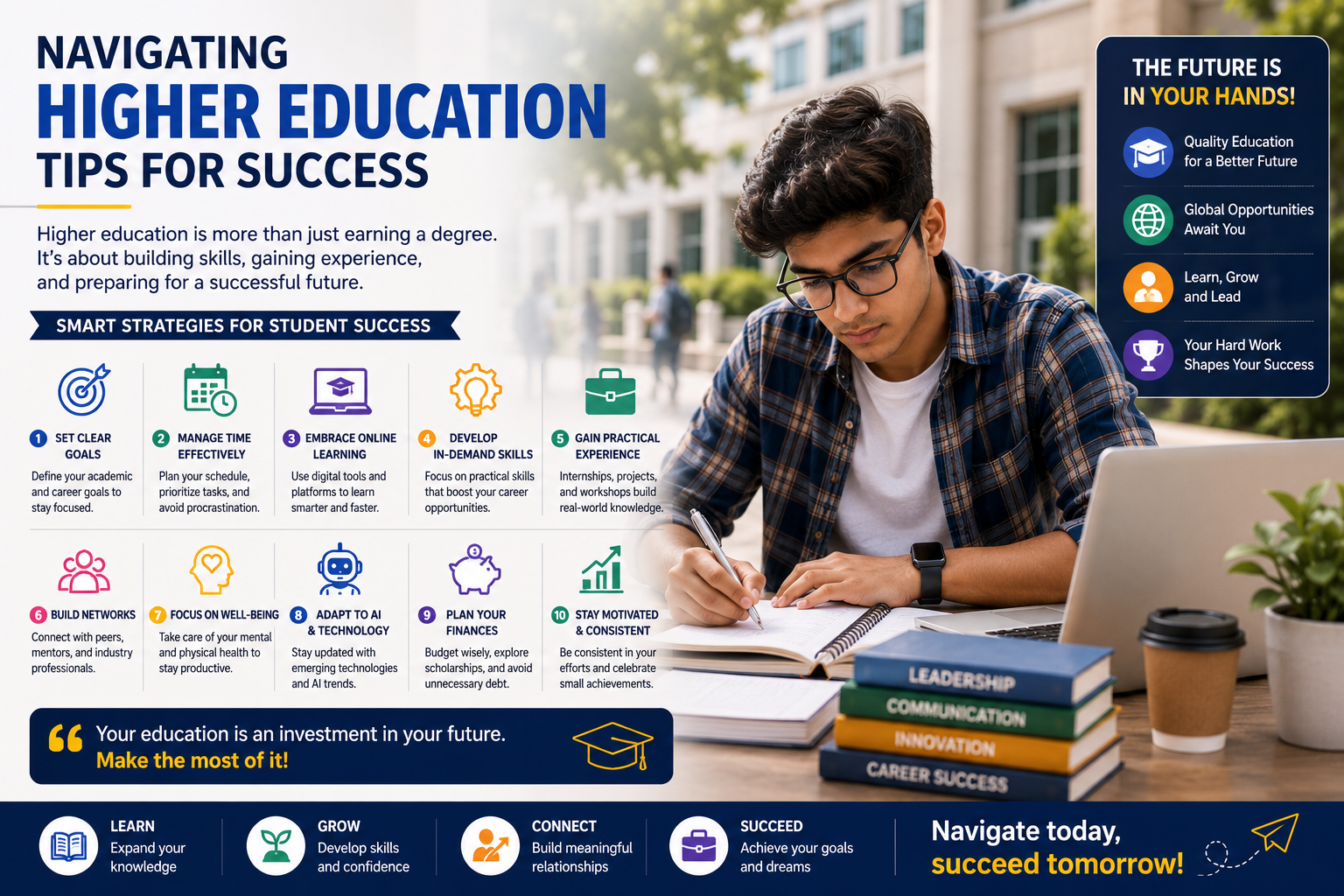
Navigating Higher Education in 2026 | Tips for Success
Discover essential tips for success in higher education in 2026, including time management, online learning, career planning, and student growth strategies.
Higher education plays a major role in shaping future careers, professional growth, and personal development. In 2026, students face a rapidly changing educational environment influenced by artificial intelligence, digital transformation, online learning, and evolving industry demands.
Modern higher education is no longer limited to earning degrees. Students are now expected to develop practical skills, adaptability, communication abilities, and career-focused knowledge that prepare them for competitive global industries.
Successfully navigating higher education requires planning, discipline, continuous learning, and the ability to adapt to changing technologies and educational systems.
Why Higher Education Is Important in 2026
The modern job market is becoming increasingly skill-focused and technology-driven. Employers now value practical knowledge, problem-solving abilities, leadership skills, and digital literacy alongside academic qualifications.
Higher education helps students:
- Build professional skills
- Improve career opportunities
- Develop critical thinking abilities
- Gain industry knowledge
- Expand networking opportunities
- Prepare for future careers
Students who approach higher education strategically are better prepared for long-term success.
1. Set Clear Academic and Career Goals
One of the most important steps in higher education is setting clear goals. Students who understand their academic interests and career objectives often perform better and remain more motivated.
Benefits of Goal Setting
- Better focus and direction
- Improved motivation
- Stronger decision-making
- Better time management
- Increased academic confidence
Clear goals help students choose the right courses, certifications, and career pathways.
2. Develop Strong Time Management Skills
Managing time effectively is essential for balancing studies, assignments, internships, and personal responsibilities.
Many students struggle because of poor scheduling and lack of organization.
Effective Time Management Strategies
- Create daily study schedules
- Prioritize important tasks
- Avoid procrastination
- Set realistic deadlines
- Balance study and personal time
Strong time management improves productivity and reduces academic stress.
3. Embrace Online Learning and Technology
Technology has become an essential part of modern higher education. Students now use online learning platforms, AI-powered tools, virtual classrooms, and digital resources to improve learning experiences.
Benefits of Educational Technology
| Technology Tool | Student Benefit |
|---|---|
| Online Learning Platforms | Flexible education |
| AI Learning Systems | Personalized learning |
| Virtual Classrooms | Remote accessibility |
| Educational Apps | Better engagement |
| Digital Libraries | Easy resource access |
Students who embrace technology gain better access to modern educational opportunities.
4. Focus on Skill Development
Academic knowledge alone is no longer enough in modern industries. Students must also develop practical and future-ready skills.
Important Skills for Students in 2026
- Communication skills
- Leadership abilities
- Critical thinking
- Problem-solving skills
- Digital literacy
- Team collaboration
- Adaptability
Skill development improves employability and career readiness.
5. Participate in Practical Learning Experiences
Practical experience helps students apply theoretical knowledge to real-world situations.
Valuable Practical Learning Opportunities
- Internships
- Workshops
- Live projects
- Industry certifications
- Volunteering activities
- Research projects
Practical learning improves confidence and strengthens professional skills.
6. Build Strong Communication and Networking Skills
Networking and communication are essential for academic and professional success.
Students who build strong professional relationships often gain better career opportunities and mentorship support.
Benefits of Networking
- Career guidance
- Internship opportunities
- Professional connections
- Industry exposure
- Better confidence
Communication skills also improve presentations, teamwork, and leadership abilities.
7. Maintain Mental Health and Well-Being
Higher education can sometimes become stressful because of academic pressure, deadlines, and career uncertainty.
Students must focus on maintaining both physical and mental well-being.
Healthy Student Habits
- Maintain proper sleep schedules
- Exercise regularly
- Take study breaks
- Avoid excessive stress
- Practice positive thinking
A healthy mind improves focus, productivity, and academic performance.
8. Adapt to AI and Future Educational Trends
Artificial Intelligence is transforming higher education by improving learning personalization, automation, and accessibility.
Students should understand how AI is shaping future careers and industries.
AI Trends in Higher Education
| AI Innovation | Educational Impact |
|---|---|
| AI Tutors | Personalized support |
| Smart Assessments | Faster evaluations |
| Learning Analytics | Better progress tracking |
| Adaptive Learning | Customized education |
Students who adapt to technological trends gain stronger future career advantages.
9. Develop Financial Planning Skills
Financial management is an important part of navigating higher education successfully.
Students should learn how to manage educational expenses, budgeting, and future financial planning.
Financial Tips for Students
- Create monthly budgets
- Manage educational expenses wisely
- Explore scholarships and grants
- Avoid unnecessary spending
- Plan long-term career investments
Financial discipline reduces stress and supports educational stability.
10. Stay Motivated and Consistent
Consistency is one of the biggest factors behind academic success.
Students often face challenges, distractions, and setbacks during higher education. Staying motivated helps them continue progressing toward their goals.
Ways to Stay Motivated
- Celebrate small achievements
- Focus on long-term goals
- Learn continuously
- Stay around positive influences
- Track personal progress
Consistency and discipline create stronger long-term success.
Common Challenges Students Face in Higher Education
Many students struggle to adjust to modern educational systems and responsibilities.
Common Higher Education Challenges
- Academic pressure
- Poor time management
- Career uncertainty
- Digital distractions
- Financial stress
- Lack of confidence
Educational institutions and mentors play an important role in supporting student growth and development.
Future of Higher Education in 2026
Higher education is becoming more flexible, technology-driven, and career-focused.
Several trends are shaping the future of education:
Major Higher Education Trends
- AI-powered learning systems
- Online and hybrid education
- Skill-based certifications
- Personalized learning
- Career-focused education
- Global learning accessibility
Students who continuously learn and adapt to modern trends will have stronger career opportunities in future industries.
Final Thoughts
Navigating higher education successfully in 2026 requires more than academic performance alone. Students must develop practical skills, adaptability, communication abilities, and continuous learning habits.
Modern education systems are increasingly focused on career readiness, technology integration, and personal development. Students who embrace learning opportunities, stay disciplined, and adapt to change are more likely to achieve long-term success.
As higher education continues evolving through innovation and digital transformation, strategic planning and continuous growth will remain essential for academic and professional achievement.
FAQs
Why is higher education important in 2026?
Higher education helps students develop professional skills, industry knowledge, and career opportunities for future industries.
How can students succeed in higher education?
Students can succeed through proper planning, time management, skill development, networking, and continuous learning.
Why is technology important in higher education?
Technology improves accessibility, personalized learning, online education, and student engagement.
What skills are important for students in 2026?
Communication, leadership, digital literacy, problem-solving, and adaptability are essential skills.
How does online learning support higher education?
Online learning provides flexibility, accessibility, and career-focused learning opportunities for students.
How is AI changing higher education?
AI improves personalized learning, automated assessments, and educational efficiency.

