


Definition of Synchronous Learning in 2026 Explained
Learn the definition of synchronous learning in 2026 and explore its benefits, features, challenges, and role in modern online education systems.
Education has evolved rapidly through digital transformation, artificial intelligence, and online learning technologies. In 2026, modern education systems now use different learning models to improve flexibility, accessibility, and student engagement.
One of the most important online education methods is synchronous learning. This learning approach allows students and teachers to interact in real time through virtual classrooms, live lectures, and online discussions.
Synchronous learning has become increasingly popular because it creates interactive learning environments that closely resemble traditional classroom experiences while maintaining the flexibility of online education.
What Is Synchronous Learning?
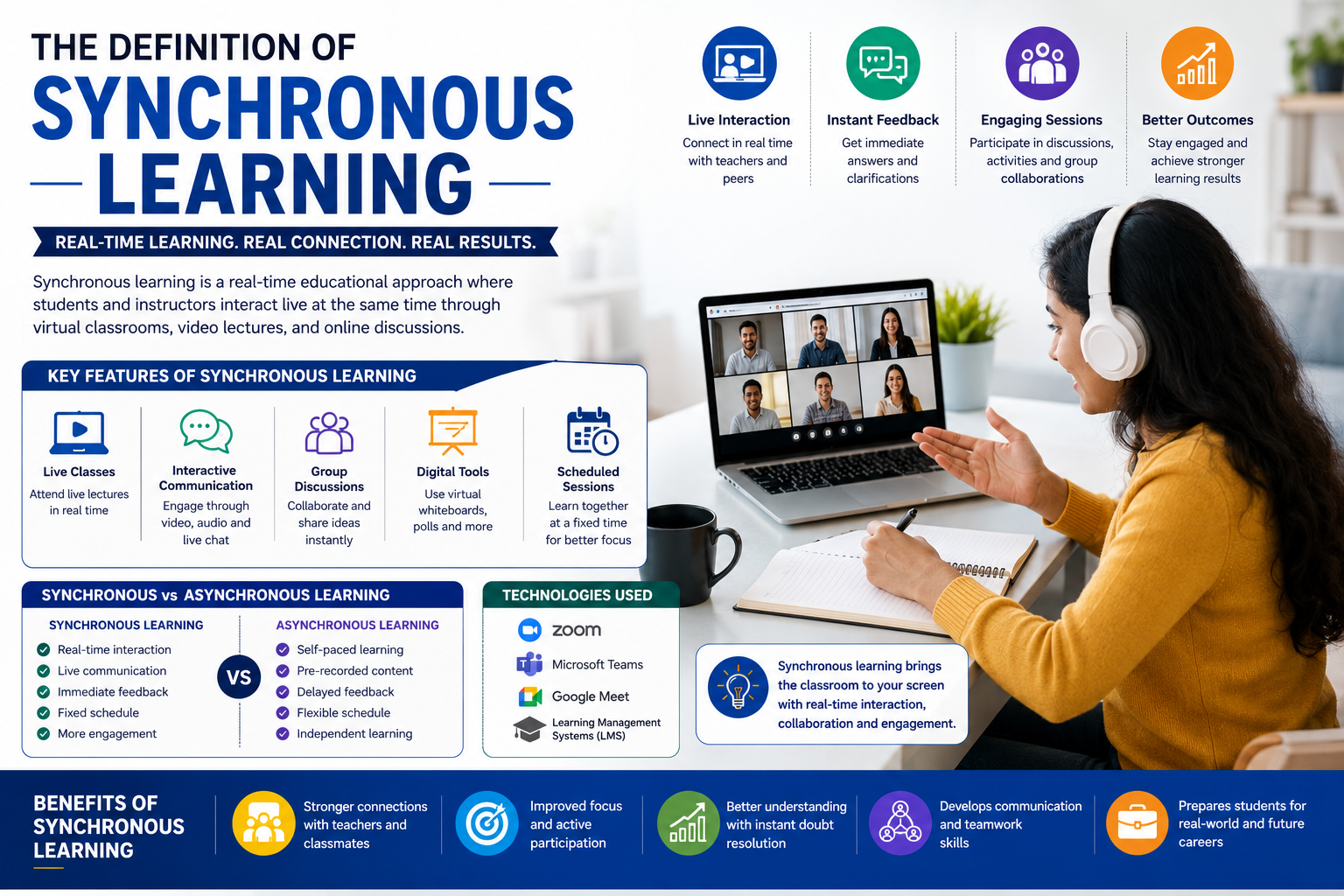
Synchronous learning refers to a learning method where students and educators participate in classes, discussions, or educational activities at the same time, even if they are in different locations.
This real-time interaction usually takes place through:
- Virtual classrooms
- Live video lectures
- Online webinars
- Group discussions
- Real-time chat systems
- Interactive online sessions
Synchronous learning creates immediate communication between teachers and students, improving engagement and collaboration.
Why Synchronous Learning Is Important in 2026
Modern education systems increasingly focus on interactive and student-centered learning experiences.
Synchronous learning is important because it helps students:
- Interact directly with educators
- Participate in real-time discussions
- Improve communication skills
- Receive instant feedback
- Stay engaged during lessons
- Build collaborative learning experiences
As remote and hybrid education continues growing, synchronous learning plays a major role in maintaining classroom interaction and educational quality.
Key Features of Synchronous Learning
Synchronous learning includes several important features that improve online education experiences.
Main Features of Synchronous Learning
| Feature | Purpose |
|---|---|
| Live Classes | Real-time teaching |
| Video Conferencing | Interactive communication |
| Instant Feedback | Faster learning support |
| Group Discussions | Better collaboration |
| Virtual Whiteboards | Interactive presentations |
| Scheduled Sessions | Structured learning |
These features create a more engaging and organized educational environment.
1. Real-Time Interaction Between Students and Teachers
One of the biggest advantages of synchronous learning is direct interaction.
Students can ask questions immediately, participate in discussions, and communicate with instructors during live sessions.
Benefits of Real-Time Communication
- Better understanding of concepts
- Faster doubt clarification
- Improved participation
- Stronger teacher-student relationships
- Better classroom engagement
This interactive environment improves learning effectiveness and student confidence.
2. Enhances Student Engagement
Traditional online learning can sometimes feel isolated. Synchronous learning helps solve this issue by creating live and collaborative educational experiences.
How Synchronous Learning Improves Engagement
- Live discussions
- Interactive activities
- Group participation
- Real-time quizzes
- Collaborative projects
Students remain more focused and motivated during active learning sessions.
3. Supports Collaborative Learning
Collaboration is an essential skill in modern education and future workplaces.
Synchronous learning encourages teamwork through live projects, breakout rooms, and group activities.
Collaborative Learning Benefits
- Better communication skills
- Teamwork development
- Problem-solving abilities
- Increased creativity
- Improved social interaction
Collaborative learning prepares students for professional environments where teamwork is important.
4. Provides Instant Feedback
In synchronous learning, educators can provide immediate feedback during lectures, discussions, and assignments.
Benefits of Instant Feedback
- Faster learning improvement
- Better understanding of mistakes
- Increased confidence
- Improved academic performance
Quick feedback helps students stay motivated and correct errors efficiently.
5. Technology Used in Synchronous Learning
Modern synchronous learning depends heavily on digital technologies and communication platforms.
Popular Technologies Used
| Technology | Educational Purpose |
|---|---|
| Zoom | Live virtual classes |
| Microsoft Teams | Collaboration and meetings |
| Google Meet | Online discussions |
| Learning Management Systems | Course management |
| Interactive Whiteboards | Visual learning support |
Technology has made synchronous learning more accessible and effective for students worldwide.
6. Difference Between Synchronous and Asynchronous Learning
Many students confuse synchronous learning with asynchronous learning. However, both learning methods are different.
Comparison Between Learning Models
| Synchronous Learning | Asynchronous Learning |
|---|---|
| Real-time interaction | Self-paced learning |
| Scheduled classes | Flexible timing |
| Live communication | Recorded content |
| Immediate feedback | Delayed responses |
| Collaborative sessions | Independent learning |
Both learning models have advantages and are often combined in hybrid education systems.
7. Challenges of Synchronous Learning
Although synchronous learning offers many benefits, it also presents certain challenges.
Common Challenges
- Internet connectivity issues
- Time zone differences
- Technical difficulties
- Digital distractions
- Fixed schedules
Educational institutions continue improving technologies and support systems to overcome these challenges.
8. Role of AI in Synchronous Learning
Artificial Intelligence is improving synchronous learning experiences through automation and personalized support.
AI Benefits in Synchronous Education
- Smart attendance tracking
- Automated transcription services
- Personalized learning recommendations
- AI-based engagement analysis
- Real-time performance tracking
AI-powered tools help improve efficiency and student participation in online classrooms.
Future of Synchronous Learning in 2026
The future of synchronous learning is becoming more advanced through AI, virtual reality, and interactive educational technologies.
Future Educational Trends
- AI-powered virtual classrooms
- Hybrid learning systems
- Virtual Reality learning experiences
- Interactive smart classrooms
- Personalized digital learning
Synchronous learning will continue playing a major role in modern education systems because of its interactive and collaborative nature.
How Synchronous Learning Benefits Working Professionals
Synchronous learning is also highly beneficial for working professionals who want flexible education while maintaining jobs and responsibilities.
Benefits for Professionals
- Live interaction with instructors
- Flexible online accessibility
- Professional networking opportunities
- Skill-based learning experiences
- Career-focused education
This learning model helps professionals continue upgrading their knowledge and career skills.
Final Thoughts
Synchronous learning has become an essential part of modern online education in 2026. Through real-time interaction, live collaboration, and digital technologies, it creates engaging learning experiences similar to traditional classrooms.
As education continues evolving through technology and innovation, synchronous learning will remain important for improving communication, collaboration, and student engagement.
Students, professionals, and educational institutions that embrace interactive online learning systems will benefit from stronger educational outcomes and future career opportunities.
FAQs
What is synchronous learning?
Synchronous learning is a learning method where teachers and students interact in real time through live online classes and discussions.
Why is synchronous learning important?
It improves communication, collaboration, engagement, and instant feedback during online education.
What technologies are used in synchronous learning?
Zoom, Microsoft Teams, Google Meet, Learning Management Systems, and virtual whiteboards are commonly used.
What is the difference between synchronous and asynchronous learning?
Synchronous learning happens in real time, while asynchronous learning allows students to study independently at flexible times.
How does AI improve synchronous learning?
AI improves online education through personalized learning, automated support, and student engagement analysis.
Is synchronous learning suitable for working professionals?
Yes. It provides flexible online learning with real-time interaction and career-focused educational opportunities.

