


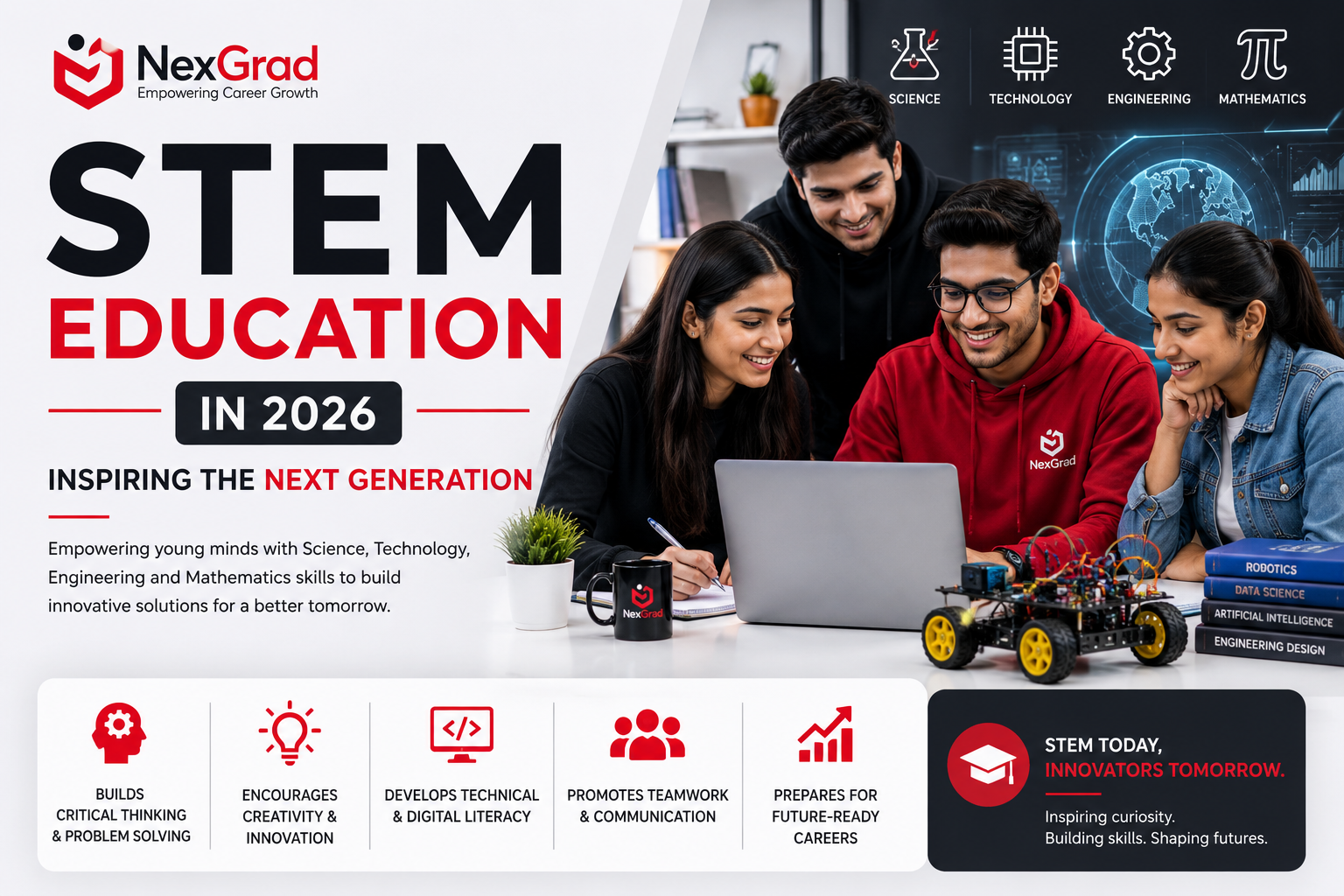
STEM Education in 2026 | Inspiring the Next Generation
Discover how STEM education in 2026 is inspiring the next generation through innovation, technology, creativity, and future-ready learning opportunities.
Education is rapidly evolving because of artificial intelligence, automation, and technological innovation. In 2026, STEM education has become one of the most important learning approaches for preparing students for future careers and modern industries.
STEM stands for Science, Technology, Engineering, and Mathematics. This educational model focuses on practical learning, critical thinking, problem-solving, creativity, and innovation.
Modern STEM education is no longer limited to textbooks and theoretical concepts. It now encourages students to explore real-world applications, digital technologies, robotics, coding, and scientific experimentation.
As industries continue transforming through digital advancements, STEM education is inspiring the next generation to become innovators, leaders, engineers, scientists, and technology professionals.
Why STEM Education Is Important in 2026
The future job market is becoming increasingly technology-driven. Industries now require professionals who can solve problems, think creatively, and work with advanced technologies.
STEM education helps students:
- Develop analytical thinking
- Improve problem-solving skills
- Build technical knowledge
- Encourage creativity and innovation
- Prepare for future careers
- Improve digital literacy
Students with STEM skills are becoming highly valuable in global industries and modern workplaces.
1. Encourages Critical Thinking and Problem Solving
One of the biggest advantages of STEM education is its focus on critical thinking and problem-solving abilities.
Students learn how to:
- Analyze situations
- Identify solutions
- Think logically
- Make informed decisions
- Solve practical challenges
These skills help students become more confident and adaptable in both academics and future careers.
2. Prepares Students for Future Careers
Technology and innovation are creating new career opportunities across industries.
STEM education prepares students for high-demand professions such as:
| STEM Field | Career Opportunities |
|---|---|
| Science | Research Scientist |
| Technology | Software Developer |
| Engineering | Robotics Engineer |
| Mathematics | Data Analyst |
Many of the fastest-growing careers in 2026 are connected to STEM-related industries.
3. Promotes Creativity and Innovation
STEM learning encourages students to experiment, explore ideas, and develop innovative solutions.
Modern STEM classrooms use:
- Robotics projects
- Coding activities
- Scientific experiments
- AI-powered learning tools
- Engineering challenges
This practical approach helps students become more creative and innovation-focused.
4. Improves Digital and Technical Skills
Digital literacy is becoming essential in modern education and future workplaces.
STEM education helps students develop technical skills such as:
- Coding and programming
- Data analysis
- Robotics
- Artificial Intelligence basics
- Digital problem-solving
- Technology adaptation
Students who develop digital skills early are better prepared for future industries.
5. Encourages Hands-On Learning
Traditional learning methods often focus heavily on theory. STEM education improves engagement through practical and interactive learning experiences.
Benefits of Hands-On Learning
- Better concept understanding
- Improved knowledge retention
- Increased classroom engagement
- Stronger practical skills
- More confidence in learning
Practical education helps students connect classroom learning with real-world applications.
6. Role of AI and Technology in STEM Education
Artificial Intelligence and smart technologies are transforming STEM education in 2026.
Modern classrooms now use:
| Technology | Educational Benefit |
|---|---|
| AI Learning Platforms | Personalized learning |
| Virtual Labs | Practical experimentation |
| Robotics Kits | Technical skill development |
| Interactive Simulations | Better engagement |
Technology makes STEM education more accessible, interactive, and future-focused.
7. Encourages Teamwork and Collaboration
Modern industries require strong teamwork and communication skills. STEM learning often includes collaborative projects and group activities.
Teamwork Benefits in STEM Education
- Better communication skills
- Improved collaboration
- Leadership development
- Creative idea sharing
- Stronger problem-solving abilities
Collaborative learning prepares students for professional work environments.
8. Supports Gender Diversity in Education
STEM education is helping create more inclusive opportunities for students from different backgrounds.
Educational institutions now encourage greater participation in STEM fields among all students, especially young women interested in science and technology careers.
Benefits of Inclusive STEM Education
- Equal learning opportunities
- Increased innovation
- Diverse perspectives
- Better educational accessibility
Inclusive education strengthens the future workforce and promotes equal career opportunities.
9. Builds Adaptability for Future Industries
Future industries will continue changing rapidly because of automation and digital transformation.
STEM education helps students adapt by developing:
- Flexible thinking
- Continuous learning habits
- Technical adaptability
- Innovation-focused mindsets
Adaptability is becoming one of the most valuable skills for future career success.
Challenges in STEM Education
Despite its benefits, STEM education also faces certain challenges.
Common Challenges
- Limited access to technology
- High implementation costs
- Lack of trained educators
- Unequal educational opportunities
- Rapid technological changes
Educational institutions continue investing in digital infrastructure and teacher training to improve STEM accessibility.
Future of STEM Education in 2026
The future of STEM education will become even more technology-driven and interactive.
Future STEM Trends
- AI-powered education
- Virtual Reality learning
- Robotics-based classrooms
- Personalized STEM learning
- Hybrid education systems
- Smart educational technologies
These innovations will continue improving student engagement and future career readiness.
How STEM Education Benefits Working Professionals
STEM education is not only important for school students. Working professionals also benefit from STEM-focused learning and certifications.
Benefits for Professionals
- Better career opportunities
- Technology skill development
- Higher employability
- Improved innovation skills
- Future career adaptability
Online STEM programs and certifications help professionals remain competitive in evolving industries.
Final Thoughts
STEM education has become one of the most important foundations for future learning and career development in 2026. By combining science, technology, engineering, and mathematics, STEM education helps students develop critical thinking, creativity, technical skills, and innovation-focused mindsets.
As industries continue evolving through digital transformation and AI, students with STEM knowledge and future-ready skills will have stronger career opportunities and long-term professional growth.
Educational institutions, teachers, and technology platforms all play an important role in inspiring the next generation through modern STEM learning experiences.
FAQs
What is STEM education?
STEM education focuses on Science, Technology, Engineering, and Mathematics to improve problem-solving, creativity, and technical skills.
Why is STEM education important in 2026?
STEM education prepares students for future careers, digital industries, and technology-driven workplaces.
How does STEM education improve student skills?
It improves critical thinking, creativity, teamwork, digital literacy, and practical learning abilities.
What technologies are used in STEM education?
AI learning platforms, robotics kits, virtual labs, and interactive simulations are commonly used.
Why is hands-on learning important in STEM education?
Practical learning improves understanding, engagement, and real-world problem-solving abilities.
How does STEM education support future careers?
STEM skills are highly valuable in industries such as AI, robotics, engineering, software development, and data analytics.

