


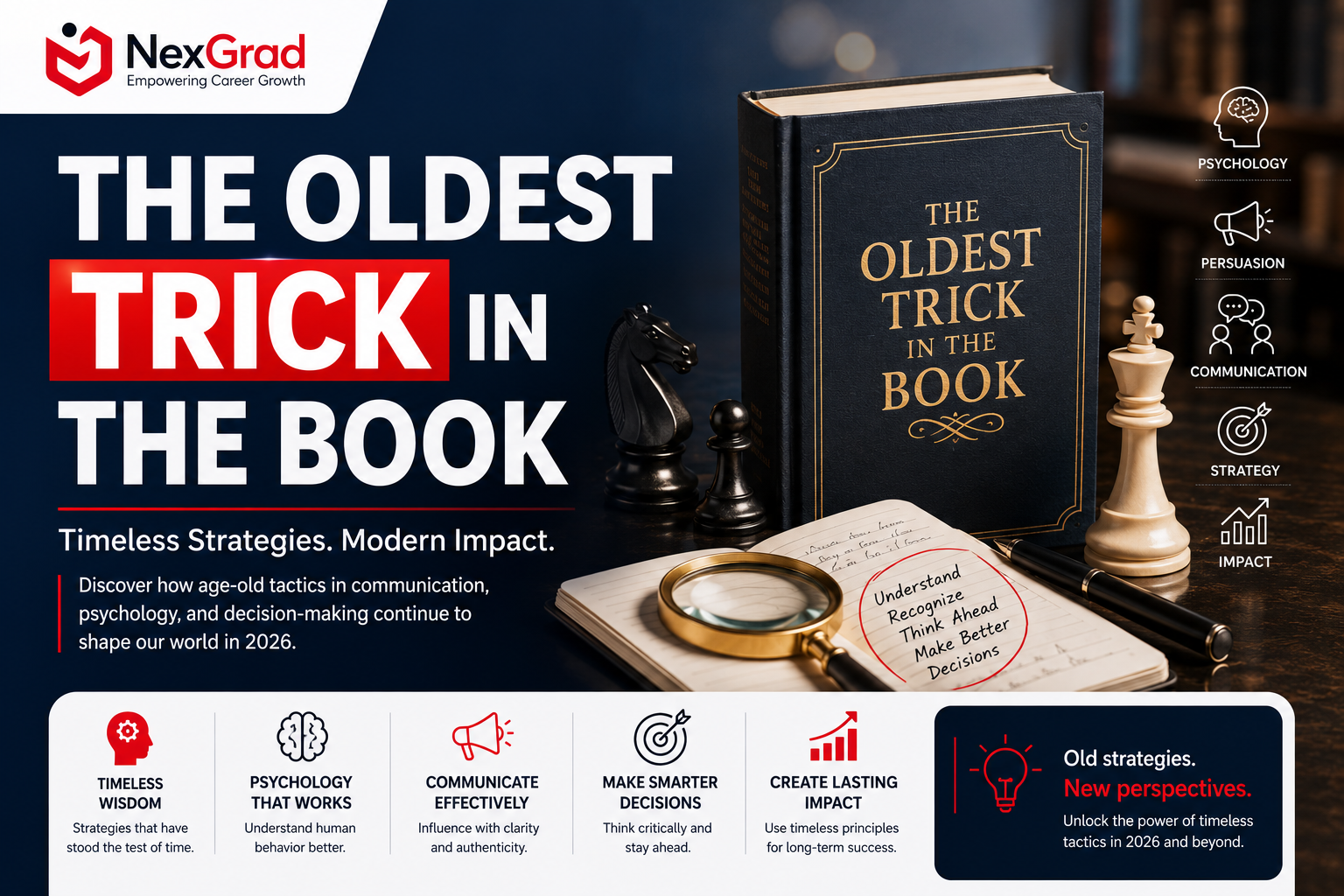
The Oldest Trick in the Book Explained in 2026
Discover the meaning of “the oldest trick in the book” in 2026 and learn how timeless strategies still influence communication, business, and modern decision-making.
The phrase “the oldest trick in the book” has been used for generations to describe methods, tactics, or strategies that people repeatedly use to influence others. In modern times, this expression is still relevant because many traditional persuasion techniques continue appearing in business, marketing, communication, and everyday life.
In 2026, technology and artificial intelligence may have changed industries, but human psychology and behavioral patterns still play a major role in decision-making. Many classic strategies continue working because they are based on emotions, trust, urgency, and curiosity.
Understanding these timeless tactics helps individuals become more aware, make smarter decisions, and improve communication skills in professional and personal environments.
What Does “The Oldest Trick in the Book” Mean?
“The oldest trick in the book” is an expression used to describe a well-known tactic or strategy that has been used repeatedly over time.
It often refers to:
- Persuasion techniques
- Marketing tactics
- Communication strategies
- Negotiation methods
- Psychological influence
The phrase usually suggests that the strategy is familiar and widely recognized, even if people still fall for it.
Why Timeless Strategies Still Work in 2026
Even with modern technology, human emotions and decision-making behaviors remain largely the same.
People still respond to:
- Urgency
- Curiosity
- Social proof
- Emotional storytelling
- Fear of missing opportunities
- Trust and authority
Businesses, marketers, and leaders continue using these timeless strategies because they influence human behavior effectively.
1. The Power of Curiosity
One of the oldest psychological strategies is creating curiosity. People naturally want to know answers, secrets, or hidden information.
Examples of Curiosity-Based Strategies
- Attention-grabbing headlines
- Mystery-based marketing
- Cliffhangers in content
- Limited information teasers
Curiosity increases engagement and encourages people to continue exploring information.
2. Fear of Missing Out (FOMO)
FOMO remains one of the strongest marketing and communication strategies in 2026.
People often make decisions faster when they believe opportunities are limited.
Common FOMO Tactics
| Strategy | Purpose |
|---|---|
| Limited-time offers | Encourage quick action |
| Exclusive memberships | Create urgency |
| Countdown timers | Increase pressure |
| Limited seats available | Improve conversions |
Businesses continue using urgency because it strongly influences customer behavior.
3. Social Proof and Trust
People often trust products, services, or ideas when they see others supporting them.
Social proof is widely used in:
- Customer reviews
- Testimonials
- Influencer marketing
- Success stories
- Community recommendations
Benefits of Social Proof
- Builds trust
- Reduces uncertainty
- Increases credibility
- Encourages confidence
In 2026, online reviews and digital reputation remain highly influential.
4. Emotional Storytelling
Storytelling has always been one of the most effective communication methods.
Businesses and educators use stories to connect emotionally with audiences and make information more memorable.
Why Emotional Storytelling Works
- Creates emotional connection
- Improves engagement
- Makes messages memorable
- Builds trust and relatability
Modern content marketing and branding heavily depend on storytelling strategies.
5. The Role of Psychology in Modern Communication
Human psychology continues influencing communication strategies across industries.
Common Psychological Triggers
- Authority
- Scarcity
- Reciprocity
- Consistency
- Emotional appeal
Understanding these triggers helps professionals communicate more effectively and ethically.
6. Marketing and Advertising Tactics in 2026
Modern digital marketing still uses many traditional persuasion methods.
Common Marketing Strategies
| Marketing Tactic | Objective |
|---|---|
| Personalized ads | Improve engagement |
| Influencer promotions | Build trust |
| Emotional branding | Increase connection |
| AI-powered recommendations | Improve conversions |
Although technology has evolved, the core principles of persuasion remain similar.
7. Importance of Critical Thinking
Because persuasive strategies are everywhere, critical thinking has become more important than ever.
Students, professionals, and consumers should learn how to:
- Analyze information carefully
- Verify sources
- Avoid emotional manipulation
- Make informed decisions
Critical thinking improves awareness and decision-making abilities.
8. Ethical Use of Persuasion Strategies
Not all persuasion techniques are harmful. Ethical communication strategies can improve education, leadership, marketing, and professional relationships.
Ethical Communication Includes
- Honest messaging
- Transparency
- Respect for audiences
- Value-driven communication
- Authentic storytelling
Responsible communication builds long-term trust and credibility.
9. AI and Modern Persuasion Techniques
Artificial Intelligence is now influencing modern communication and marketing strategies.
AI helps businesses through:
- Personalized recommendations
- Behavioral analysis
- Smart advertising
- Audience targeting
- Content optimization
However, ethical AI usage remains important to maintain transparency and trust.
10. Lessons Students and Professionals Can Learn
Understanding timeless communication strategies helps individuals improve professional and personal skills.
Valuable Skills Developed
- Communication abilities
- Marketing awareness
- Critical thinking
- Leadership skills
- Emotional intelligence
Awareness of persuasion techniques helps people become more informed and confident decision-makers.
Common Misunderstandings About Persuasion
Many people assume persuasion is always manipulative. However, effective communication can also inspire learning, motivation, leadership, and positive action.
Positive Uses of Persuasion
- Education and teaching
- Motivational leadership
- Awareness campaigns
- Professional communication
- Career development
The key difference lies in ethical intent and transparency.
Future of Communication Strategies in 2026
Communication strategies will continue evolving through AI, digital media, and personalized technologies.
Future Communication Trends
- AI-powered personalization
- Interactive digital experiences
- Data-driven communication
- Emotional branding
- Authentic content creation
Professionals who understand both technology and human psychology will communicate more effectively in modern industries.
Final Thoughts
“The oldest trick in the book” remains relevant because human psychology continues shaping communication, marketing, leadership, and decision-making.
In 2026, timeless strategies such as curiosity, storytelling, urgency, and social proof are still widely used across digital and professional environments.
Understanding these techniques helps students, professionals, and consumers improve critical thinking, communication skills, and awareness in a rapidly evolving digital world.
As technology continues advancing, ethical and intelligent communication will remain essential for building trust, influence, and long-term success.
FAQs
What does “the oldest trick in the book” mean?
It refers to a well-known tactic or strategy that has been used repeatedly over time to influence or persuade people.
Why do old persuasion strategies still work?
They continue working because human psychology, emotions, and decision-making patterns remain similar.
What is FOMO in marketing?
FOMO stands for Fear of Missing Out and is used to create urgency and encourage faster decisions.
Why is storytelling important in communication?
Storytelling creates emotional connection, improves engagement, and makes information more memorable.
How does AI influence modern communication?
AI improves personalization, audience targeting, and content recommendations in marketing and communication.
Why is critical thinking important in digital communication?
Critical thinking helps people analyze information carefully and avoid manipulation or misinformation.

